2026
- January 2026 Newsletter
- Feb/Mar: The Magic of How It's Made: One Tea, Infinite Processes
- April 2026 - Making Water: Tea Tavern Magic that Makes All the Difference
- May 2026 Newsletter
- June 2025 Newsletter
January 2026 Newsletter
☕ Varieteas of Teas 🍵
Greetings Adventurers!
One of the most magical things about tea is that even though all teas derive from the same Camelia sinesis plant, there is a seemingly endless variety of teas to explore.
That’s because changing how tea is harvested (or even when tea leaves and tea buds are picked during the plant’s life cycle), or how the leaves are cut, dried, withered, prepared and even packaged leads to very different flavors and experiences.
Which is precisely why our Tea Master holds special weekly gatherings to encourage and teach others about the craft and ritual of Chinese gongfu tea. After all, nearly all teas, from green teas to Pu-erh teas, originated in ancient China. In fact, “sinesis” translates to “from China.”
Learning about gongfu tea is an exciting quest to embark on! But it can be a bit overwhelming. So, we offer you this general guide to some of the most common Chinese teas available and a few of the ancient methods used to create them.

Green Tea
Though mostly associated with Japan, ceremonial matcha – the powdered tea that is frothed into a delightful brew with a special whisk – actually originated from the Tang dynasty in China. And though it is by far the most famous green tea, we invite you explore other Chinese green tea varieties.
Chinese green tea is the most ancient of all teas, and there are thousands of different varieties.
Green tea is unique amongst Chinese teas in that it is not oxidized at all, but heated by either pan-frying or steaming immediately after being harvested.
Never the less, there’s an endless number of ways green tea leaves are prepared. For example, to create on of the most traditional Chinese green teas, Dragon Well tea, the leaves are rolled flat and pan-fried.
Other green teas are processed by rolling the harvested leaves into tight curls or spirals. And still other green teas are beguiling, like GPT’s Master’s Green Tea. This tea defies expectations by being calming instead of energizing!
Learn more about The Tea Tavern’s green teas here.

Black (Red) Tea
What we call black tea in the West is known as hong cha (红茶) in China — literally “red tea.” In most cases, this is because of the color of the tea once steeped, such as with our Jin Ju Mei tea, the brew can look a bit a bit like Western black teas, though the darkness of the brew can vary. The lighter color of the Jin Ju Mei tea is due partly due to the fact the leaves are harvested from the Wuyi Mountains in the Fujian Province during the early spring.
On the other end of the color spectrum (at least within Chinese red teas) is Black Phoenix, a very dark tea that most Westerners would look at think of as a traditional black tea. This blend gets its bold, cacao flavor from a highly specific process of oxidation and roasting.
Not to be outdone in adding a colorful name to the “red” tea spectrum, Nepal has its own version of a Chinese red tea, the Tinjure ‘Golden Black’ Ilam, which is hand picked and minimally processed by the Tinjure Tea Cooperative. True to its name, this tea more closely resembles a golden elixir than a red or black brew, however.
Whatever color is revealed in the cup, however, we can assure you Chinese “red” teas are always offer comfort and warmth.
Explore all of The Tea Tavern Chinese Red teas here.

Oolong Tea
Sitting between green and black teas is Oolong tea. A favorite amongst tea drinkers, Oolongs can be anything from light and fruity to slightly woody and rich. All, however, are created using highly specific oxidation methods.
Take Bird King Da Hong Pao, for example. Tea leaves foraged from the ancient, 400- to 800-year-old indigenous Bird King trees in Guizhou were roasted twice in accordance with Tea Master Lian’s family tradition. In a region well known for its centuries of tea craftsmanship, Master Lian and his daughter applied Da Hong Pao methods from Fujian to leaves that had been resting since August, resulting in a wholly new flavor profile and experience.
Another perfect example of the craftsmanship that creates a perfect cup of Oolong tea is the Phoenix High Mountain Oolong. The leaves are harvested from trees that defiantly grow amidst the craggy rocks of the cool mountainsides in the northern Guangdong Province. Each tea tree grove is cultivated to emulate specific flavors of various flowers and fruits. Once harvested, the leaves are oxidized for a highly specified amount of time using the wulong method.
Find your perfect Oolong tea here.

☁️ White Teas
White tea is the most delicate of all — lightly processed and soft on the palate. Each cup of white tea is a story of heritage, culture, and gently extracting new flavors and experiences from ancient methods.
Other white teas are prepared as delicately as the brew they yield. The Himilayian tea leaves harvested to make Phidiam White Prakash – extra fuzzy to protect them from the cold – are simply air dried, yielding a light and delicate flavor that contrasts with the harsh environment in which the trees grow.
Another impressive example of coaxing flavor from nearly-untouched tea leaves is the Aged Master's White tea. Harvested at Pan Yin Mountain by our friends at Grass People Tree from Bird King trees that are anywhere from 400 to 600 years old, this tea is processed using 100 percent natural, ancient methods without artificial heat and humidity by Master Lin in 2016. In comparison to other white teas, that means an extra long withering, or drying, time, sometimes done in the shade or at night specifically to lengthen this part of the process. All this is done to help the signature floral notes of white tea blossom even more.
👉 Explore a range of White teas with our Wild Tea Sampler.

🍃 Pu-erh & Hei Cha (Fermented) Teas
Pu-erh teas, most simply put, are black, fermented teas known for a variety of bold, more assertive flavors (though some can have whispers of floral notes). Of course, as with all Chinese tea craftsmanship, there are different methods of fermentation and preparation that are all steeped in their own traditions and regional cultures.
This is reflected in the wide variety of colors pu-erh and Hei Cha teas are available in. From the midnight black of the assertive Tei Ji Shu Pu-erh, which uses a “pile fermentation” method to the cheerful bright red of Aini Bamboo Shu Pu’erh, traditionally processed in a section of cut bamboo, this category of tea is an entire quest of its own within the tea enthusiast world.
Explore our Hei Cha & Pu-erh Teas, including samples, here.
☕ Where to Start?
If you’re just beginning your tea adventure:
- Start with a lighter Green or White tea if you love delicate notes.
- Try Oolong to experience layered complexity.
No matter your taste, Tea Tavern offers carefully selected loose-leaf teas, sustainably sourced and crafted for delightful brewing. You can sample teas to find your perfect cup.
Or, join the Traveling Tea Tavern, our monthly gathering during which people learn about the ancient ritual of gongfu steeping, share stories and laughter, and enjoy tea with other Adventurers!
Make starting easy with our Adventurer’s Brewer Kit. Everything you need to begin exploring tea at home!
Feb/Mar: The Magic of How It's Made: One Tea, Infinite Processes
Hello Travelers!
As you learn about begin to prepare your own Gongfu tea, some ancient truths will begin to reveal themselves: while origin, cultivar, and terroir matters, it’s how the tea is processed that determines the tea’s category and ending flavor.
This is why all true Chinese teas come from same Camellia sinensis tree but there are still several categories of tea. What differentiates white from green, oolong from black, or raw from ripe Pu-erh isn’t the plant itself — it’s what happens to the leaf after harvest (and, sometimes, when the leaves are harvested).
Processing includes several parts: oxidation, withering, shaping, aging, and microbial activity (fermentation). There are thousands of possible technique and timeline combinations possible so it should come as no surprise many Chinese tea plantations or even families have developed their own specific processing methods to create their specific “brand” of tea.
Today we’re exploring six primary Chinese tea categories, specifically through the lens of Gongfu preparation.
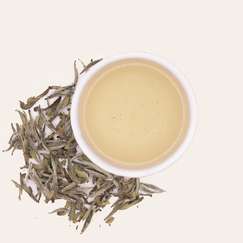
White Tea (白茶) — Controlled Withering & Minimal Intervention
White tea processing is deceptively simple – it’s often called “minimally processed” but make no mistake: its processing is still highly technical.
White tea basically has only two processing steps: harvesting and withering. Fresh buds and/or young leaves are plucked and then allowed to wither (or sit out on a tarp, in a cave, or other designated area) for an extended period of time. During withering, moisture content decreases while enzymatic activity begins transforming amino acids and aromatic compounds.
Sounds simple, but when, for how long, and where the withering takes place can drastically alter the aroma, color and flavor of the tea.
For example, white teas are traditionally withered in shaded, well-ventilated environments, but a notable exception to this rule is Charcoal Roasted Silver Needle tea by Li Yanmei, a tea master in Funding.
For that tea, buds for that tea are harvested before they even open and then withered for a longer-than-usual time in the shade. So far, so good. But then the withering process is finished in the sun
Unlike other teas, white teas are made without rolling or pan-firing the tea leaves. Instead, oxidation occurs naturally and lightly during this slow dehydration phase.
White teas are particularly well suited to Gongfu style brewing because the extended withering deepens aromatics and softens the texture of the leaves. This becomes particularly noticeable when brewed using the short, concentrated infusions that is the hallmark of Gongfu.
Green Tea (绿茶) — Shaqing & Preservation of Freshness
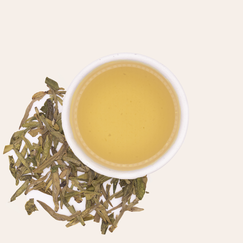
Green tea is defined by kill-green (杀青, shāqīng) — the application of heat shortly after plucking to halt enzymatic oxidation. This step preserves chlorophyll – hence the green color - amino acids like L-theanine, and volatile compounds responsible for vegetal and chestnut notes.
In China, shāqīng is often achieved through pan-firing or baking rather than steaming (steaming is more common in Japanese teas). Once heated, the leaves are shaped — often in ways specific to the particular tea; they may be twisted, flattened or curled — and then dried.
One of the best examples of an intricate green tea process is Dragon Well Tea. Declared the official tea of the royal court by Emperor Qianglong during the Quing Dynasty, this light, fresh tea exemplifies all the hallmarks of green tea craftsmanship.
Even the harvesting is specific, with exactly one bud and two leaves getting plucked from the tea tree. The leaves are then withered in the sun and then fix, shaped and dried over heat in a pan.
Green teas tend to have an umami note because the oxidation is halted early though like all Chinese teas a range of flavors and aromas are possible. Gongfu brewing specifically highlights their texture and minerality, but that does require lower temperatures and short infusions.
Oolong Tea (乌龙茶) — Orchestrated Partial Oxidation
Oolong processing is known for a wide range of oxidation, anywhere from roughly 10% to 70% depending on the process used. It is among the most complex in Chinese tea craftsmanship and some varieties, such as Yellow Twig, even require extra attention and effort when brewing (but are well worth it!).
Generally speaking, oolong tea leaves are first sun-withered, then moved indoors for a series of resting and shaking cycles. During shaking (yaoqing), the leaf edges are gently bruised, encouraging oxidation at the margins while preserving a greener interior.
Oxidation levels can range roughly from 10% to 70%, depending on style. After reaching the desired oxidation point, the leaves undergo kill-green to halt the process, followed by rolling and, often, roasting.
Bird King Da Hong Pao, is roasted twice in accordance with a the family tradition of Tea Master Lian in Guizhou. The tea itself is foraged from indigenous Bird Trees that are that are 400- to 800-years old and have been protected by the Miao people for centuries.
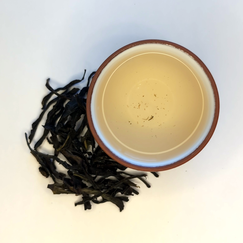
Lightly oxidized oolongs emphasize florals and high aromatics; heavily oxidized and roasted styles develop deeper fruit, honey, or caramel notes. The difference can be start and apparent even just by looking at the leaves themselves. Gongfu brewing is particularly suited to oolong because repeated infusions reveal its layered processing.
Black/Red Tea (红茶) — Full Oxidation
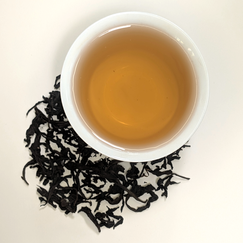
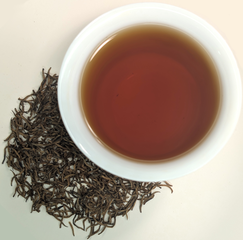
In Chinese classification, black tea is called hong cha (red tea), referring to the liquor color. Black/Red Chinese teas are all fully oxidized before drying, making them the most assertive teas in the Chinese canon.
Full oxidation is achieved by first withering the leaves so they are pliable and then rupturing the cell walls of the leaves by twisting or rolling them. That triggers full oxidation by exposing enzymes in the tea leaves to oxygen. The rich colors – ranging from inky black to deep amber hues – come from catechins converting into theaflavins.
Unlike heavily roasted teas, black teas typically emphasize fruit, malt, cocoa, or honeyed profiles, but there is still a range of flavor and color within the vast black tea family. For example, Jin Jun Mei (a “red” tea) is known for a light, fruity flavor whereas Black Phoenix has a more bold, cacao-like taste.
Gongfu brewing a black tea is especially enjoyable because the flavor of the tea can transition from bright top notes in early steeps to deeper sweetness later on.
Dark Tea & Pu-erh (黑茶 / 普洱茶) — Post-Fermentation & Aging
Dark teas differ fundamentally from other categories due to microbial fermentation.
Raw (sheng) Pu-erh begins as a green-style maocha that is sun-dried but not fully stabilized. Over time — years or decades — natural microbial activity transforms the leaf, deepening flavor and smoothing bitterness. One of the Tea Tavern’s most happy accidents was discovering 1995 “Green Pu-erh” tea, which – as the name suggests – has been fermenting since 1995. The result! A smoky undertone reminiscent of BBQ sauce!
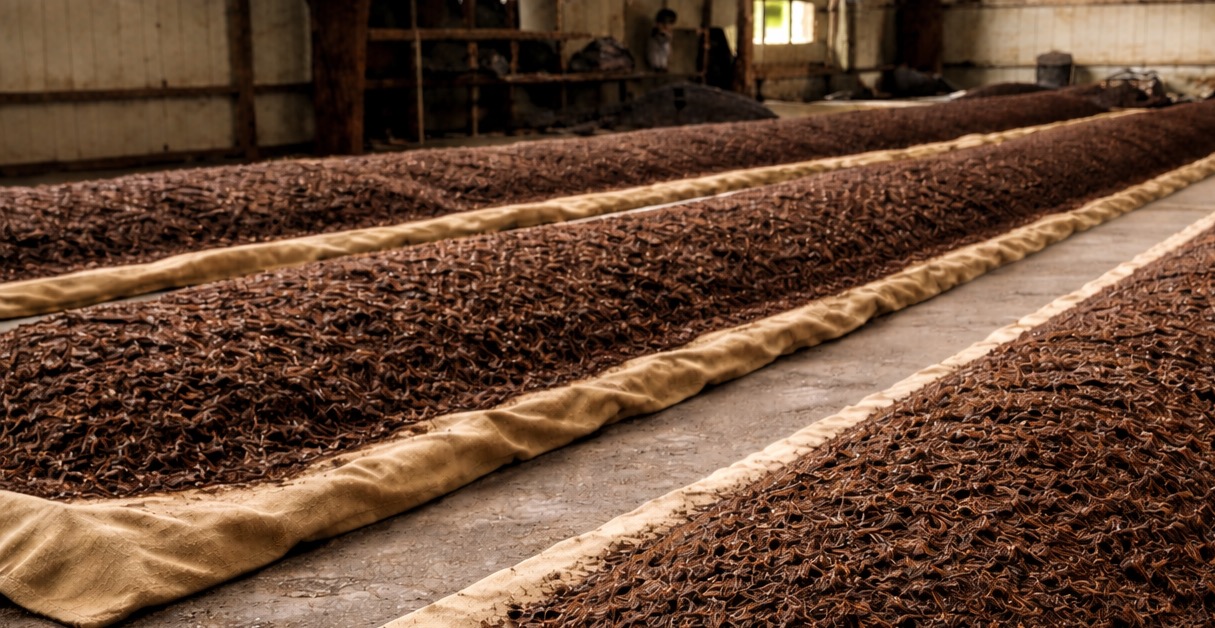
Ripe (shu) Pu-erh undergoes an accelerated fermentation process called wo dui, where leaves are piled, moistened, and carefully turned to encourage microbial development under controlled conditions. One of the best examples of this method is the luxurious Tei Ji Shu Pu-erh tea which is wet fermented for a very specific amount of time.
As you refine your Gongfu practice, try tasting across categories while focusing on how processing expresses itself in the cup — from the bright immediacy of green tea to the layered depth of aged dark tea.
Or, come to a Traveling Tea Tavern meetup and watch the process unfold for yourself! You can ask questions, meet like-minded tea lovers and sample new teas!
April 2026 - Making Water: Tea Tavern Magic that Makes All the Difference
Water: The Secret Tea Ingredient
One of the most important components of tea is the water in which its brewed, an ancient "secret" going back to 730 A.D.
That's when Classic of Tea (Cha Jing), a 10-chapter tome on tea, was written by brew master Lu Yu, also known informally as China's tea sage. In the book, Yu spends an entire chapter on explaining how and why the water in which tea is brewed can make all the difference in the world. Surprisingly, he rated groundwater as the worst for tea, but then again he didn't have the advanced filtration and bottling technology we use today.
More recently, our friends at Tea Curious have amassed a small library of blog posts in which they test different water, from bottled to tap, to see whether and how water impacts tea brewed at the same volume, in the same temperature, and steeped for the exact same amount of time.
Spoiler: The type of water used makes a huge, absolutely noticeable, drastic difference. Many of the Tea Curious tests show just how stark that difference can be simply upon visual inspection, let alone taste.
Why Does Water Make Such a Huge Difference?
Generally speaking, what's in water matters quite a bit. Most people assume that means filtered, distilled, or reverse-osmosis water is best for tea, but that's not actually true. In fact, those options will produce an odd not-quite-"bitter" flavor because -- put very simply -- there simply isn't anything for the tea flavor to cling to and infuse with. However, over-mineralized teas can have too much "stuff" in it and thus block full flavor extraction as well.
So What Water to Use?
There isn't necessarily a one-water-fits-all answer. As any water wizard will tell you, water has many mysterious properties and can take many different forms. Even tap water within the same municipal district can be wildly different due to the age of the pipes it traveled through or the exact variances of the water treatment plant it went through.
Adding to potential confusion, not all bottled water is the same, either. Aquafina isn't Zero Water when it comes to solid particulates, and Evian has a different filtration goal and level than Aquafina.
Which can all be rather overwhelming. And troubling -- tea, after all, is gotten in exchange for treasure or coins, so one never wants to waste it.
The Tea Tavern's Water Spells from Tea Curious
The good news is you can create your own perfect water for brewing tea, and without being a water wizard or needing to cast a water spell. Though the process can feel like magic.
Basically, you do this by starting from as close to scratch as possible.
Begin with distilled water.
Then, re-add the right minerals, in the right amount, to ensure an optimal tea experience.
With our reminineralizers, this process is as easy as adding a few drops from a bottle to your tea.
However, there are some key considerations to keep in mind: different formulations of water will highlight different aspects of tea. For example, our Original remineralizer package highlights the bright and vibrant flavors of tea by adding hardness and alkalinity while keeping calcium low. The Springtide formulations, however, are meant to mimic the soft water found in Japan. While it can be used for all teas, it is best suited for whites, oolongs and green teas. For warmer, more umami flavors, and especially to bring out the darker notes often found in black teas, pu’er and heicha, and darker oolongs, you'll want to try the Autumn remineralizers.
Still feeling a bit of trepidation?
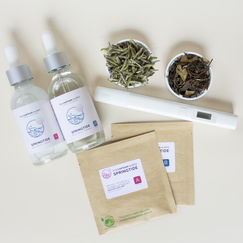
No worries. As always, we at the Tea Tavern are prepared to help make your tea journey as smooth as possible. Take this: Our Basic Brewer's Components bundle.
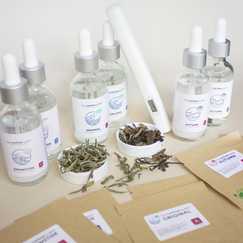
And for our more well-traveled Adventurers, already familiar with water's mystical properties, there's the Master Brewer's Components kit.
Still need a map on your Water Quest?
If you're in the Phoenix metro valley, you can always join us for a Travelling Tea Tavern ceremony at HeatSync Labs where a welcoming group of like-minded folks -- including our brew master -- will happily answer questions. Or you can send any questions to quests@tea-tavern.com.
May 2026 Newsletter
The Traveling Tea Tavern Chronicle On Caffeine, Calm, and the Curious Ways of the Leaf
Settle in, warm your hands on your cup, and let us speak of a force both subtle and powerful—caffeine in tea.
Many Adventurers arrive at the Tavern asking the same questions: “Which tea has the most caffeine?” or “Which will let me rest easy?”
The answer is far from simple. One of the most magical things about tea is that it does not deal in absolutes, but rather is shaped by land, leaf, craft, and even your own hands.
What Determines Caffeine in Tea?
All true tea comes from Camellia sinensis, yet its effects can range from calming to invigorating depending on four key factors:
The Land In Which it Grew
Where tea is grown shapes its chemistry as much as its flavor. That means two teas of the same type can feel entirely different depending on origin alone.
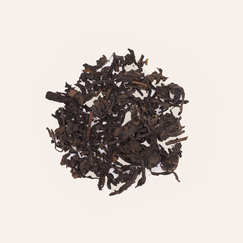
For example, teas from regions like Yunnan in southwestern China often use large-leaf varietals, which tend to carry higher caffeine levels than smaller-leaf plants grown elsewhere.
The Leaf Itself (Bud vs. Mature Leaf)
You might expect delicate teas to be gentler—but that’s not always the case.
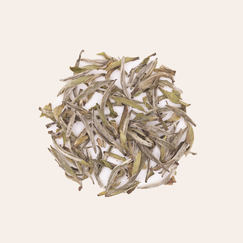
Young buds and early leaves actually contain more caffeine than older, mature leaves. This is why some high-grade white teas (made mostly from buds) can be quite energizing.
The Tea Master's Craft (Processing Methods)
What happens after harvest can matter, as well. We've discussed different processing methods before, but not in the context of caffeine. What happens to tea leaves and buds after their selected and picked will also largely impact how the tea affects the drinker. As a general rule and after centuries of honing their craft, tea masters have learned that:
-
Roasting can slightly reduce caffeine
-
Oolong teas, often roasted, tend to have more moderate amounts of caffeine
-
Fermentation (as in some dark teas) can increase caffeine
In a way, processing is how a tea gets its "personality."
The Brewing (Your Role in the Ritual)
Finally, you (or the person brewing tea) have some control over the caffeine content as well.
For example, you can slightly increase caffeine extraction with:
-
Hotter water (though don't exceed the recommended range)
-
Longer steep times
-
More leaf used
-
More infusions
A general guideline (this is by no means exact) would be:
-
For a more gentle, soothing cup → use cooler water, shorter steeps
-
For a stronger, invigorating cup → hotter water, longer steeps
What About Decaffeinated Tea?
Sometimes, a Traveler wants to rest, and is looking for tea to soothe and calm rather than invigorate. In those cases, one may consider decaffeinated tea. However, it's important to note that the process often strips away more than just caffeine.
Common methods (like CO₂ or solvent processing) can reduce complexity and depth. The result is a quieter cup, but sometimes at the cost of character.
For many Travelers, there is a better path.
Naturally Caffeine-Free Alternatives
Rather than removing caffeine, you can simply choose teas that never had it.
Tisanes—herbal infusions—offer warmth and flavor without stimulation.
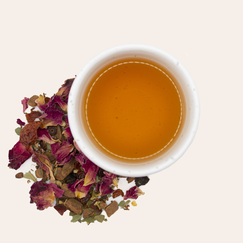
For evenings, quiet moments, or restful endings to long journeys, we often suggest brewing a cup of Mosscap Hearth – Winter’s Warmth. This rooibos-based blend with rosehips and hawthorn, it delivers an earthy, smooth, and comforting cup—completely caffeine-free and well-suited for winding down by the fire.
A Coffee Alternative for Steady Energy
If you’re stepping away from coffee but still crave depth and ritual, roasted herbal blends can offer a satisfying middle ground.
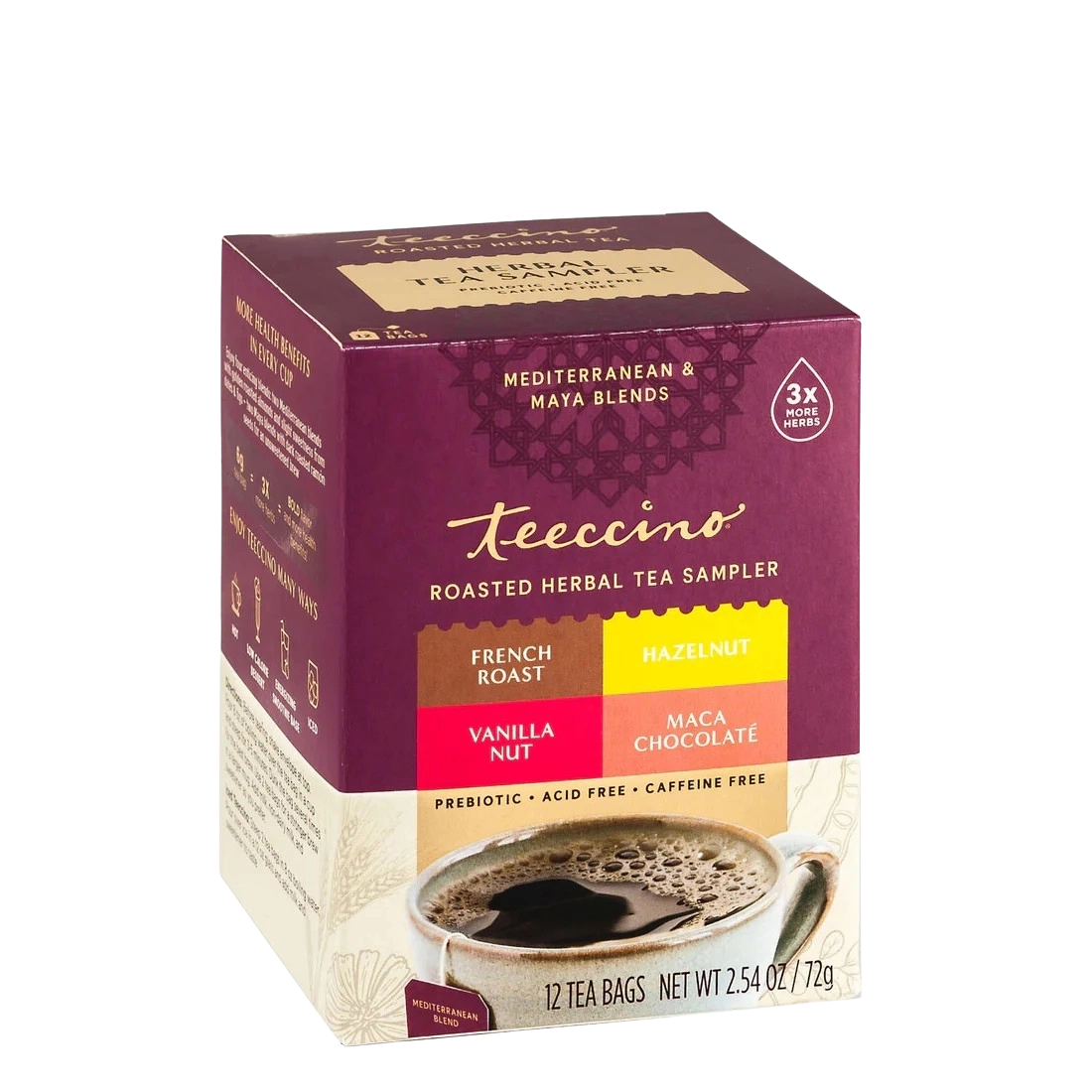
That's why we offer Teecinno, a tea substitute specifically designed for those who cherish the smell, ritual, and robustness of coffee but are unable to partake. These coffee-like teas (you can even by them as grounds you put in an auto-drip coffee maker) offer a, roasted experience without the sharp peaks and crashes, we recommend exploring the Classic Roasted Herbal Tea Sampler Box.
These blends provide bold, toasty flavors without any caffeine at all. It's not coffee, but it's pretty darn close and still a lovely beverage for what it is. It's also an ideal beverage for those transitioning from coffee to tea.
When You Need Focus and Clarity
Some moments, however, call for sharpness—the early start, the long study, the deep work.
In those cases, you'll need a strong brew like Tinjure ‘Golden Black’ Ilam (Obsidian Embers). The high altitude and minimal processing of this tea make it particularly invigorating, offering a clean, steady lift without the jittery edge often found in coffee.
Choose Your Path Wisely
Despite labels that offer milligram readings, the truth is there is not really a single “highest” or “lowest” caffeine tea in the ancient pantheon of Chinese teas. There are only choices you make shaped by your intended outcome.
-
Seeking rest? → herbal blends or mature-leaf teas
-
Seeking balance? → oolongs or lighter brews
-
Seeking energy? → bud-heavy or high-elevation black teas
Finally, if you still have questions or wish to sample some of these teas, join the Traveling Tea Tavern every Wednesday at HeatSync Labs. You'll meet like minded people also exploring new tea journeys, led by Tea Tavern brew master Farrah.
For the Curious Scholar
If you’d like to explore the deeper research behind caffeine in tea, you can begin here:
https://www.sciencedirect.com/science/article/pii/S0308814624001234
https://pubmed.ncbi.nlm.nih.gov/16815703/
https://pubmed.ncbi.nlm.nih.gov/12587987/
June 2025 Newsletter
The Original Luxury Tea: The Tea Tribute System
The craftsmanship of Chinese tea touches every aspect of the process during which its made. Tradition, craft and ancient knowledge impact all stages of the tea's journey from leaf to cup, from where the tea grows to when and how it is harvested. Everything, including whether the bud or a specific number of leaves are plucked, is a deliberate, pre-determined act. These exacting processes have usually been honed centuries ago and upheld ever since. Even the way the final Chinese tea is packaged, whether as loose leaf tea or in a solid tea cake, is a silent nod to a long and storied history.
Chinese tea is never just a beverage.
Every cup is actually a story of sometimes secret and oftentimes painstaking processes. A cup of Chinese tea is a testimony to entire generations of a single family, or thousands of seasons weathered by ancient trees. Traditions have deep, ancient roots, much like the tea trees themselves. Still, the ancient methods and rituals of Chinese teas are not just a byproduct of the tea's geography, regional cultures or even artisanship. More often than not, the traditions grew in the fertile soil of necessity.
For a thousand years, Chinese tea functioned as both commerce and infrastructure,funding the entire vast empire. Tea did everything ranging from providing revenue for the war horses that kept dynasties in power via the Tea Horse Road (茶马古道) to the more mundate, albeit necessary, role of funding infrastrucure for the massive and sprawling nation.
In fact, for many tea families, the quality of the tea their farms and plantations produced could be a matter of life and death, primarily due to the tea tribute system.
How Tribute Became Tradition
Ancient China was a land of ever undulating power centers, usually taking the form of the central Chinese government, led by a dynastic Imperial family. These families were under constant threat from nomadic militaries and disparate tribes, factions and ethnicities, all jockeying for their own power centers or, not infrequently, to topple the central government itself. Maintaining control over such a massive land mass and quarelsome, diverse population was extraordinarily expensive and left Chinese emperors in a perpetual state of finding ways to finance their own militaries or maintain political control in various regional power centers.
During this time, tea was not the universal beverage we know it as today. Almost no one but royalty and the very elite could afford tea, Nothing illustrated this reality more than the Tea Tribute system.
The Indirect Tea Tax of the Tribute System
This Tea Tribute system, instituted around 700 A.D. by the Tang Dynasty, mandated that specific geographical regions set aside their finest tea leaves for the emperor and the Imperial court. It was a kind of indirect taxation system in which providing the perfect cup could seal the fate of an entire family for generations. A pleasing cup brought the family political favor, possibly military protection, and regional influence. Displeasing the tea taster -- who may very well be the Emporer themself -- could result in complete ruin.
For families growing tea, this meant cultivating a tribute tea meant more than simply setting aside the best of a crop. The tea had to be memorable and distinct from the other tributes. Since all tea comes from the same plant, and the environment from which the tea leaves and buds were harvested could not be externally controlled, how the tea was processed became the main method used to coax unique flavors, colors and tastes from the tea.
Meng Ding Gan Lu, for example, was the only tribute tea from the Sichuan province. It was pan fried three separate times and rolled after each time. Then, after the final shaping and rolling, the leaves were dried over a charcoal fire.
Jun Shan Yin Zhen, on the other hand, garnered much of its flavor from its environment, a mountainous, 1-kilometer island perpetually shrouded in fog. What the island lacked in space, however, its rich soil made up for by imparting a distinct flavor to the tea.
Jun Shan Yin Zhen is the epitome of processing overcoming geographic environment. The soil of Jun Shan is heavy with minerals, which would normally result in a full-bodied, thick, or heavy tea. But the creativity and craftsmanship of the tea masters transformed the hearty tea leaves into one of the lightest, most delicate of Chinese teas for its time.
Exactly one bud and only three to four leaves were pan dried. Then, the tea was placed in a humid pot for up to five days. That process was then repeated a second time, which almost magically transforms into its signature yellow color, yielding a light and almost floral tea.
Every Chinese Tea Today is a Tribute
The legacy of tribute teas explains both the continued craftsmanship, enduring nature and deep global appreciation for Chinese teas.
It's why exactly one bud and two leaves are plucked to make Dragon Well tea. The ancient, centuries-old trees that grow on Pan Yin Mountain, where GPT's Master Green Tea is harvested, may very well have grown leaves made into tea enjoyed by an imperial courtesan or royal advisor.
The Aini minority, who still live today in the Yunnan province around the Lancang River region of Xishuangbanna, may have ancestors who ventured into the very same forest they do today, and with the same purpose: to pluck tea leaves from the wild tea trees that still offer their leaves in harvest. Today, Aini Bamboo Shu is made by processing the harvested leaves in fresh cut bamboo, roasting them over a charcoal fire. The tea leaves are then dried outside on special racks. This careful process was undoubtedly passed down through generations of Aini people. It is not unlikely that the current brew master's ancestors, who patiently coaxed flavor from the tea in the same manner, stood before some of the most powerful people in Chinese history.
The Tea Tavern puts forth an extraordinary amount of effort to source the best of Chinese tea. Teas that reflect tradition, honor the Earth, and bring people together in a spirit of enjoyment, learning, and discovery.
Though some degree of technology has been introduced into today's processing for some tea farms and plantations – usually in the form of improved temperature control, storage, or processing capacity – many Tea Tavern teas are made in the exact same way they were hundreds of years ago.
Which makes sipping a Tea Tavern tea more than just enjoying a healthy beverage. When you take part in the process of brewing, tasting, and perhaps even sharing Chinese tea from Tea Tavern, you become another thread in the beautiful, ancient tapestry of the enduring history of tea.
Source Materials and Further Reading Suggestions
The Cambridge World History of Food: Tea (chapter)
A useful scholarly overview of tea’s economic and cultural role in China and beyond.
Britannica — Tea Production and Trade
https://www.britannica.com/topic/tea-beverage
Chinese Empire Forced to Evolve the Economic System to Resist the Nomadic Empire--Case: Establishment of the Tea Tax System in the Tang Dynasty
Serious Eats: “Matcha’s 1,000-Year Journey”
Song-dynasty whisked powdered tea, tea competitions, and the Chinese origins of what later became matcha.
https://www.seriouseats.com/the-ancient-chinese-ritual-behind-the-internets-favorite-green-drink-11891929?utm_source=chatgpt.com
All the tea in China: the political impact of tea