
The Magic of How It's Made: One Tea, Infinite Processes
Hello Travelers!
Quick Answer
What determines the flavor and category of Chinese tea?
Although all true teas come from the Camellia sinensis plant, it is the processing method—not the plant itself—that determines whether a tea becomes white tea, green tea, oolong tea, black (red) tea, or pu-erh. Factors such as withering, oxidation, rolling, roasting, drying, and fermentation create dramatically different flavors, aromas, textures, and brewing experiences. Understanding tea processing is one of the most important steps in learning Gongfu tea preparation because each tea category reflects centuries of craftsmanship and regional tradition.
Key Takeaways
• All true teas originate from the Camellia sinensis plant.
• Tea processing determines a tea's category and flavor profile.
• White tea undergoes minimal processing and controlled withering.
• Green tea uses kill-green (shāqīng) techniques to halt oxidation.
• Oolong tea is partially oxidized and highly process-dependent.
• Black (red) tea is fully oxidized before drying.
• Pu-erh and dark teas develop flavor through fermentation and aging.
As you learn about begin to prepare your own Gongfu tea, some ancient truths will begin to reveal themselves: while origin, cultivar, and terroir matters,matter, it’s how the tea is processed that determines the tea’s category and ending flavor.
This is why all true Chinese teas come from the same Camellia sinensis treetree, but there are still several categories of tea. What differentiates white from green, oolong from black, or raw from ripe Pu-erh isn’t the plant itself — it’s what happens to the leaf after harvest (and, sometimes, when the leaves are harvested).
Processing includes several parts: oxidation, withering, shaping, aging, and microbial activity (fermentation). There are thousands of possible techniquetechniques and timeline combinations possiblecombinations, so it should come as no surprise that many Chinese tea plantations or even families have developed their own specific processing methods to create their specificown “brand” of tea.
TodayToday, we’re exploring six primary Chinese tea categories, specifically through the lens of Gongfu preparation.
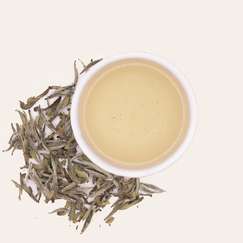
White Tea (白茶)白茶) — Controlled Withering & Minimal Intervention
White tea processing is deceptively simple – it’s often called “minimally processed” but make no mistake: its processing is still highly technical.
White tea basically has only two processing steps: harvesting and withering. Fresh buds and/or young leaves are plucked and then allowed to wither (or sit out on a tarp, in a cave, or other designated area) for an extended period of time. During withering, moisture content decreasesdecreases, while enzymatic activity begins transformingto transform amino acids and aromatic compounds.
Sounds simple, but when, for how long, and where the withering takes place can drastically alter the aroma, color and flavor of the tea.
For example, white teas are traditionally withered in shaded, well-ventilated environments,environments. butStill, a notable exception to this rule is Charcoal Roasted Silver Needle tea by Li Yanmei, a tea master in Funding.Fuding.
For that tea, buds for that tea are harvested before they even open and then witheredwither for a longer-than-usual time in the shade. So far, so good. But then the withering process is finished in the sunsun.
Unlike other teas, white teas are made without rolling or pan-firing the tea leaves. Instead, oxidation occurs naturally and lightly during this slow dehydration phase.
White teas are particularly well well-suited to Gongfu Gongfu-style brewing because the extended withering deepens aromatics and softens the texture of the leaves. This becomes particularly noticeable when brewed using the short, concentrated infusions that isare the hallmark of Gongfu.
Green Tea (绿茶)绿茶) — Shaqing & Preservation of Freshness
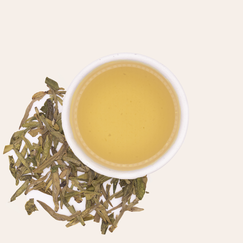
Green tea is defined by kill-green (杀青,杀青, shāqīng) — the application of heat shortly after plucking to halt enzymatic oxidation. This step preserves chlorophyll – hence the green color - amino acids like L-theanine, and volatile compounds responsible for vegetal and chestnut notes.
In China, shāqīng is often achieved through pan-firing or baking rather than steaming (steaming is more common in Japanese teas). Once heated, the leaves are shaped — often in ways specific to the particular tea; they may be twisted, flattened or curled — and then dried.
One of the best examples of an intricate green tea process is Dragon Well Tea. Declared the official tea of the royal court by Emperor QianglongQianlong during the QuingQing Dynasty, this light, fresh tea exemplifies all the hallmarks of green tea craftsmanship.
Even the harvesting is specific, with exactly one bud and two leaves getting plucked from the tea tree. The leaves are then withered in the sunsun, and then fix,fixed, shaped and dried over heat in a pan.
Green teas tend to have an umami note because the oxidation is halted earlyearly, thoughthough, like all Chinese teasteas, they can exhibit a range of flavors and aromasaromas. are possible. Gongfu brewing specifically highlights their texture and minerality, but thatit does requirerequires lower temperatures and short infusions.
Oolong Tea (乌龙茶)乌龙茶) — Orchestrated Partial Oxidation
Oolong processing is known for a wide range of oxidation, anywhere from roughly 10% to 70%, depending on the process used. It is among the most complex in Chinese tea craftsmanshipcraftsmanship, and some varieties, such as Yellow Twig, even require extra attention and effort when brewing (but are well worth it!).
Generally speaking, oolong tea leaves are first sun-withered, then moved indoors for a series of resting and shaking cycles. During shaking (yaoqing), the leaf edges are gently bruised, encouraging oxidation at the margins while preserving a greener interior.
Oxidation levels can range from roughly from 10% to 70%, depending on the style. After reaching the desired oxidation point, the leaves undergo kill-green to halt the process, followed by rolling and, often, roasting.
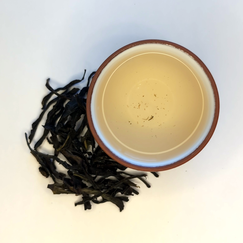
Bird King Da Hong Pao , is roasted twice in accordance with a the family tradition of Tea Master Lian in Guizhou. The tea itself is foraged from indigenous Bird Trees that are that are 400- to 800-years old and have been protected by the Miao people for centuries.
Lightly oxidized oolongs emphasize florals and high aromatics; heavily oxidized and roasted styles develop deeper notes of fruit, honey, or caramel notes.caramel. The difference can be startstark and apparent even just by looking at the leaves themselves. Gongfu brewing is particularly suited to oolong because repeated infusions reveal its layered processing.
Black/Red Tea (红茶)红茶) — Full Oxidation
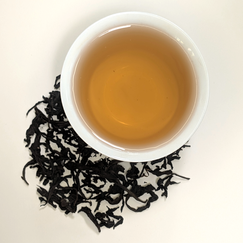
In Chinese classification, black tea is called hong cha (red tea), referring to the liquor color. Black/Red Chinese teas are all fully oxidized before drying, making them the most assertive teas in the Chinese canon.
Full oxidation is achieved by first withering the leaves soto theymake arethem pliable andpliable, then rupturing thetheir cell walls of the leaves by twisting or rolling them. That triggers full oxidation by exposing enzymes in the tea leaves to oxygen. The rich colors – ranging from inky black to deep amber hues – come from catechins converting into theaflavins.
Unlike heavily roasted teas, black teas typically emphasize fruit, malt, cocoa, or honeyed profiles, but there is still a range of flavor and color within the vast black tea family. For example, Jin Jun Mei (a “red” tea) is known for a light, fruity flavorflavor, whereas Black Phoenix has a more bold,bolder, cacao-like taste. Gongfu
Gongfu-brewed black tea is especially enjoyable because the tea's flavor of the tea can transition from bright top notes in early steeps to deeper sweetness later on.
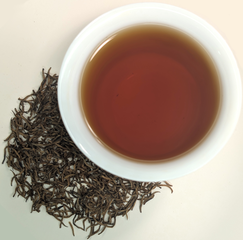
Dark Tea & Pu-erh (黑茶 / 普洱茶)普洱茶) — Post-Fermentation & Aging
Dark teas differ fundamentally from other categories due to microbial fermentation.
Raw (sheng) Pu-erh begins as a green-style maocha that is sun-dried but not fully stabilized. Over time — years or decades — natural microbial activity transforms the leaf, deepening flavor and smoothing bitterness. One of the Tea Tavern’s most happyhappiest accidents was discovering 1995 “Green Pu-erh” tea, which – as the name suggests – has been fermenting since 1995. The result! A smoky undertone reminiscent of BBQ sauce!
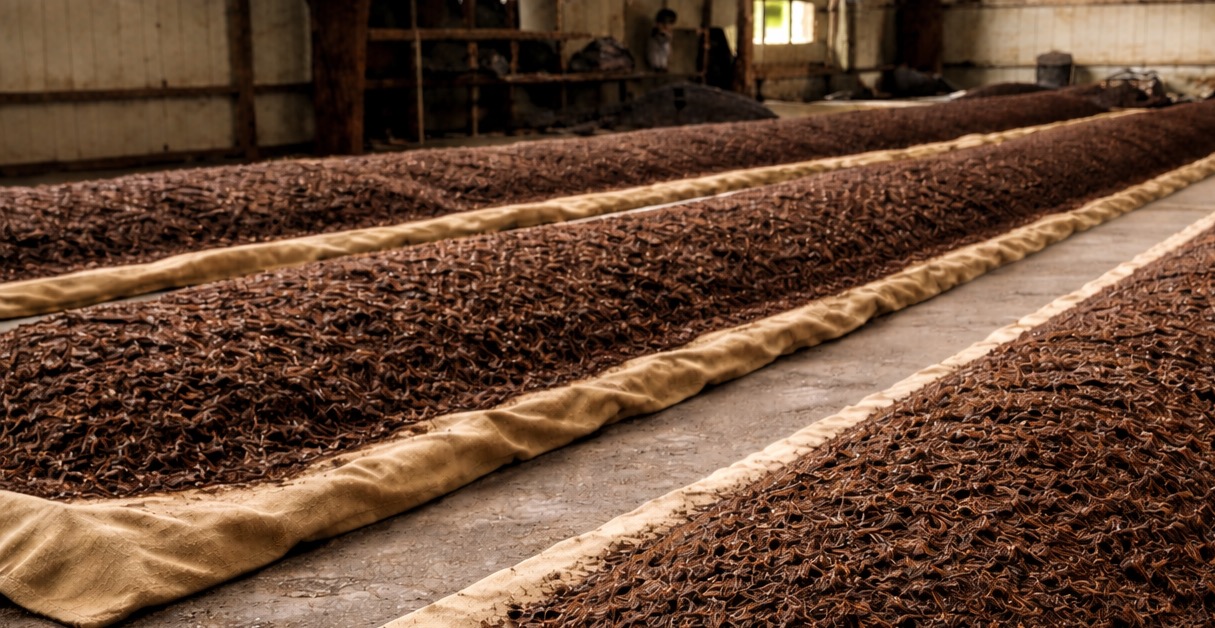
Ripe (shu) Pu-erh undergoes an accelerated fermentation process called wo dui, where leaves are piled, moistened, and carefully turned to encourage microbial development under controlled conditions. One of the best examples of this method is the luxurious Tei Ji Shu Pu-erh teatea, which is wet wet-fermented for a very specific amount of time.
period.
As you refine your Gongfu practice, try tasting across categories while focusing on how processing expresses itself in the cup — from the bright immediacy of green tea to the layered depth of aged dark tea.
Frequently Asked Questions
What determines the type of Chinese tea?
The processing method determines the tea category. Different combinations of withering, oxidation, shaping, roasting, drying, and fermentation create distinct tea styles from the same Camellia sinensis plant.
What is tea oxidation?
Oxidation is a natural chemical process that occurs when tea leaves are exposed to oxygen after harvesting. The amount of oxidation significantly influences flavor, aroma, color, and texture.
Why is green tea different from black tea?
Green tea undergoes kill-green processing shortly after harvest to halt oxidation, while black tea is fully oxidized before drying, creating deeper and more robust flavors.
What makes oolong tea unique?
Oolong tea is partially oxidized, typically between 10% and 70%, allowing it to express characteristics that range from floral and delicate to rich and roasted.
What is the difference between raw and ripe Pu-erh tea?
Raw (sheng) Pu-erh ages naturally over time through slow microbial activity, while ripe (shu) Pu-erh undergoes an accelerated fermentation process called wo dui.
Why is Gongfu brewing well suited to Chinese tea?
Gongfu brewing uses short, repeated infusions that allow tea drinkers to experience how flavors, aromas, and textures evolve throughout multiple steeps.
Or, come to a Traveling Tea Tavern meetup and watch the process unfold for yourself! You can ask questions, meet like-minded tea lovers and sample new teas!